
Pollinators at Work: How Native Flowers Support Wildlife All Summer Long


June is one of the most important months of the year for Wisconsin’s pollinators. As native flowers begin to bloom across prairies, fields, wetlands, roadsides, and backyard plantings, they provide a critical source of food for bees, butterflies, birds, and many other forms of wildlife. These summer blooms are more than just beautiful additions to the landscape. They are part of a much larger habitat system that supports conservation, healthy ecosystems, and the future of Wisconsin’s outdoor heritage.
Native flowers play a major role in prairie restoration and upland habitat. Plants such as milkweed, coneflowers, wild bergamot, black-eyed Susans, blazing star, and other native bloomers provide nectar, pollen, seeds, and shelter throughout the summer months. Because these plants are adapted to Wisconsin’s climate and soils, they are often more beneficial to wildlife than non-native ornamental plants. Their deep roots also help improve soil health, reduce erosion, and support the long-term stability of restored prairie areas.
For bees and butterflies, native flowers are essential. Bees rely on pollen and nectar to survive, raise young, and continue pollinating plants throughout the growing season. Butterflies use many native plants as nectar sources, while some species depend on specific host plants to lay their eggs. Monarch butterflies, for example, rely on milkweed. Without the right native plants on the landscape, many pollinator species struggle to find the food and habitat they need.
Birds also benefit from native flowers and pollinator habitat. Native plants attract insects, which are an important food source for many songbirds and young upland birds. Later in the season, seed-producing flowers provide food for birds as summer turns to fall. A healthy stand of native flowers also creates cover, nesting habitat, and protection for wildlife moving through grasslands and prairie edges.
Why Wetlands Matter in Summer
Wetlands are nature’s nursery for Wisconsin wildlife, especially during the month of June. As summer begins, wetlands come alive with ducklings, goslings, frogs, turtles, dragonflies, pollinators, and countless other species that depend on wetland habitat for food, water, shelter, and protection. These areas are more than scenic places on the landscape. They are some of the most productive and important habitats for wildlife during the growing season.

Young waterfowl rely on wetlands for safety and survival. Ducklings and goslings use shallow water, wetland plants, and nearby cover to hide from predators while feeding on insects, aquatic plants, and other natural food sources. Frogs and turtles also depend on wetlands for breeding, feeding, and shelter, while dragonflies and pollinators thrive around wetland edges where native flowers and plants provide nectar, insects, and cover.
Wetlands and pollinator habitat are closely connected. Native flowers growing along wetland edges help support bees, butterflies, and other insects, while those insects provide food for birds, amphibians, and young wildlife. A healthy wetland edge filled with native plants can benefit pollinators, waterfowl, songbirds, upland birds, and many other species all at the same time.
For landowners, adding native flowers does not have to be difficult. Small plantings along field edges, wetland borders, ditches, fence lines, gardens, or unused areas can make a big difference. Even a few patches of native flowers can provide valuable food and shelter for pollinators and birds. Larger prairie plantings can create long-term habitat that supports wildlife while also improving the beauty and health of the land.
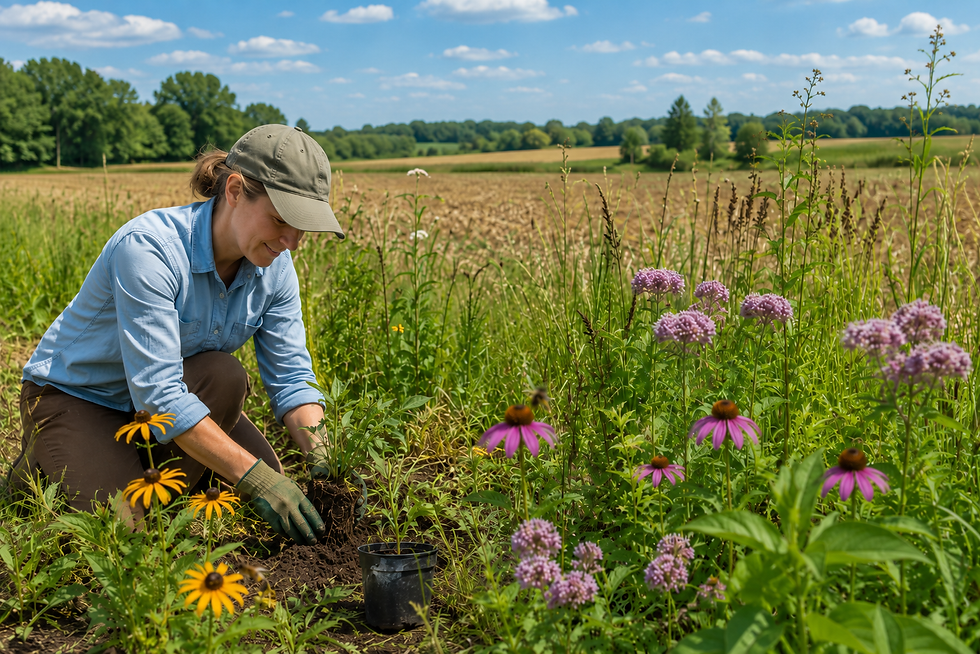
Pollinator habitat is closely connected to upland habitat. When native flowers are planted alongside warm-season grasses and other prairie species, they help create a diverse landscape that supports pheasants, songbirds, insects, butterflies, bees, and small mammals. This diversity is what makes prairie restoration so valuable. A strong prairie is not made up of one plant or one species. It is a living system where flowers, grasses, insects, birds, wetlands, and wildlife all depend on each other.
June is peak pollinator season, and it is also one of the most active months for wetland wildlife. It is the perfect time to notice what is blooming, what is nesting, and what is using the habitat around you. Whether you manage farmland, hunting land, recreational property, a wetland edge, or a small backyard, native flowers and healthy wetlands can play an important role in conservation. Every planting and every protected wetland helps create a stronger connection between pollinators, birds, upland habitat, waterfowl, and the future of Wisconsin wildlife.
At Wings Over Wisconsin, habitat conservation is at the heart of our mission. Supporting native flowers, wetland edges, prairie restoration, and upland habitat helps provide food, cover, nesting areas, and long-term benefits for wildlife across the state. By encouraging native plantings and protecting wetland habitat, we can help ensure that Wisconsin’s prairies, uplands, wetlands, and wildlife continue to thrive for future generations.
Product Title
16 px collapsible text is perfect for longer content like paragraphs and descriptions. It’s a great way to give people more information while keeping your layout clean. Link your text to anything, including an external website or a different page. You can set your text box to expand and collapse when people click, so they can read more or less info.
$320

Product Title
16 px collapsible text is perfect for longer content like paragraphs and descriptions. It’s a great way to give people more information while keeping your layout clean. Link your text to anything, including an external website or a different page. You can set your text box to expand and collapse when people click, so they can read more or less info.
$900

Product Title
16 px collapsible text is perfect for longer content like paragraphs and descriptions. It’s a great way to give people more information while keeping your layout clean. Link your text to anything, including an external website or a different page. You can set your text box to expand and collapse when people click, so they can read more or less info.
$560


Comments